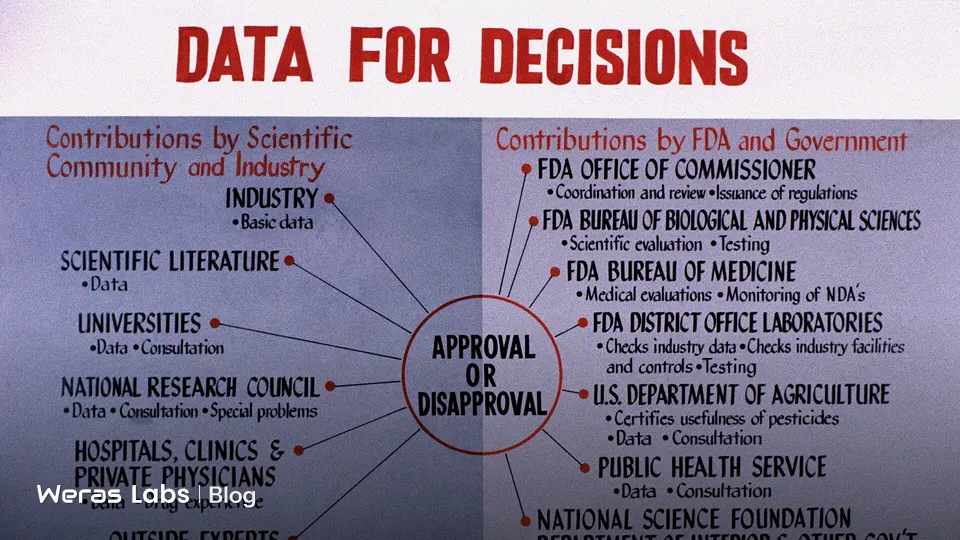
Decision-making techniques are structured approaches that allow for the systematic evaluation of available options to arrive at the most suitable outcome. These techniques are used to solve problems, evaluate opportunities, and determine strategic direction, whether individually or as a team. Especially in situations with high uncertainty, they bring clarity and objectivity to the decision-making process, enabling choices based on more solid foundations.
Why Use Decision-Making Techniques?
Every decision made in business has a direct or indirect impact on the company's future. While intuitive decisions sometimes work, they can fall short in complex situations and lead to undesirable outcomes. Using decision-making techniques reduces potential risks, allows you to consider different perspectives, and strengthens the logic behind your decisions. This enables you to make more consistent, transparent, and defensible choices.
These techniques are particularly valuable in high-risk projects, resource allocation, or when developing new market strategies. Adopting a data-driven and structured approach enhances decision quality at both personal and corporate levels. It also fosters a shared understanding among team members, facilitating the ownership and implementation of decisions.
Core Decision-Making Techniques
Various decision-making techniques are available for different situations. Here are some fundamental techniques commonly used and found beneficial in business:
1. Pros and Cons List
This is one of the simplest techniques. It involves listing the positive and negative aspects of a decision in two separate columns. This method helps quickly visualize options and compare basic advantages and disadvantages. It is generally suitable for less complex decisions and provides a quick overview.
2. Decision Matrix (Weighted Scoring)
Ideal for complex decisions with multiple options and criteria. Each criterion is assigned a weight based on its importance, and each option is scored against each criterion. The scores and weights are multiplied to obtain total scores, which helps identify the most suitable option. This method increases objectivity and makes the process transparent.
3. SWOT Analysis
Involves analyzing the Strengths, Weaknesses, Opportunities, and Threats of a project, initiative, or decision. SWOT analysis is primarily used to comprehensively assess internal and external factors of a situation, especially when making strategic decisions. This analysis is effective in identifying potential risks and areas for growth.
4. Pareto Analysis (80/20 Rule)
Based on the principle that 80% of problems or results come from 20% of causes. This technique allows for efficient resource utilization by focusing on the most significant problems or effective solutions. It is particularly useful when there are many issues, helping to decide which ones should be addressed first.
5. Cost-Benefit Analysis
Involves comparing the monetary costs of a decision or project with its expected monetary benefits. This analysis is used to evaluate how financially sound an investment is. Sometimes, not only financial but also social or environmental benefits can be considered.
6. Eisenhower Matrix
Helps prioritize tasks and decisions based on urgency and importance. It categorizes tasks into four groups: 'Urgent and Important', 'Important but Not Urgent', 'Urgent but Not Important', and 'Neither Urgent Nor Important'. This matrix is effective for time management and deciding which tasks to focus on.
Example of a Decision Matrix
The table below illustrates a simplified example of a decision matrix for evaluating three different technology options for a software project. Each criterion has a weight (from 1-5, 5 being most important), and each option has a score (from 1-10, 10 being best) for these criteria.
| Criterion (Weight) \ Option | Technology A | Technology B | Technology C |
|---|---|---|---|
| Performance (5) | 8 | 9 | 7 |
| Cost (4) | 7 | 6 | 9 |
| Maintainability (3) | 9 | 8 | 7 |
| Developer Support (4) | 8 | 7 | 6 |
| Total Score | 145 | 141 | 142 |
In this example, Technology A has the highest total score and is identified as the most suitable option according to this matrix. Such a matrix concretizes the decision process and clarifies the impact of different factors.
Effective Decision-Making Process
Before applying decision-making techniques, following a structured process improves the quality of your decisions:
- Define the Problem and Objective: Clearly understand the situation requiring a decision. Articulate what you aim to achieve and the goals of the decision. A poorly defined problem can lead to incorrect solutions.
- Gather Information: Collect all necessary data, facts, and opinions related to the decision. Evaluate both quantitative and qualitative data. This stage allows you to assess alternatives more thoughtfully.
- Identify Alternatives: List all possible options that could solve the problem or help achieve the objective. Do not hesitate to think creatively and avoid limiting yourself to the first solutions that come to mind.
- Evaluate Alternatives: Analyze each alternative based on the defined criteria and the information you have gathered. You can use appropriate decision-making techniques mentioned above at this stage. Consider the potential outcomes, risks, and benefits of each option.
- Make the Decision: Based on all evaluations, choose the option you believe is most suitable. This may not always be the highest-scoring option; sometimes strategic or cultural factors can also play a role.
- Implement and Review: Put your decision into action and regularly monitor its results. Evaluate whether the decision is having the expected impact and make adjustments if necessary. This feedback loop helps improve your future decision-making processes.
Avoiding Decision-Making Pitfalls
When making decisions, certain inherent cognitive biases can mislead us. Being aware of these biases helps you make more objective decisions:
- Cognitive biases: Systematic errors in human brain processing of information. For instance, confirmation bias is our tendency to seek out and interpret information that supports our existing beliefs. Overconfidence bias is our tendency to be overly confident in our judgments. The framing effect is how the presentation of information influences our decision.
- Groupthink: The tendency to conform to the decisions of the majority can overshadow individual judgment.
- Sunk cost fallacy: The tendency to continue a project that has become irrational due to past investments.
To avoid such biases, it is crucial to listen to different perspectives, carefully examine data, and question your decisions. Developing an objective viewpoint is key to making more robust choices.
Summary
Making effective decisions in business is a fundamental competency for both personal and corporate success. By using decision-making techniques, you can analyze complex situations more clearly, manage risks, and better evaluate opportunities. Remember that the best decisions often result from a combination of comprehensive information gathering, systematic evaluation, and awareness of potential biases. As a first step, consider trying a structured technique like a decision matrix and following a step-by-step decision-making process. These approaches will provide a solid foundation for making more informed and successful choices in your professional life.
From Weras Labs
We can help you with this
We turn what you just read into working software for your business. You talk to the person writing the code; price and timeline are clear from day one.
Frequently asked questions
What are decision-making techniques?
Decision-making techniques are structured approaches that allow for the systematic evaluation of available options to arrive at the most suitable outcome. Examples include pros and cons lists, decision matrices, SWOT analysis, and cost-benefit analysis.
Which decision-making technique is most commonly used in business?
While it varies by situation, the 'Decision Matrix' for complex decisions and 'SWOT Analysis' for strategic assessments are prominent in business. For simpler situations, the 'Pros and Cons List' is also frequently used.
What common pitfalls should be avoided when making decisions?
When making decisions, one should avoid pitfalls such as cognitive biases (confirmation bias, overconfidence), groupthink, and the sunk cost fallacy. Listening to different perspectives and objectively evaluating data helps mitigate these errors.
About the author

Habip Dayan
Founder of Weras Labs
Habip Dayan is the founder of Weras Labs, a company that builds software products for professionals and teams. He has been building software since 2018 and writes about AI, cloud architecture and product design.
Comments
Be respectful; no ads or personal data. Comments that break the rules are removed.