What Determines the Cost of a Software Project
Two projects that look alike can come with very different price tags. This article explains what actually drives software cost and how you can keep the estimate under control.

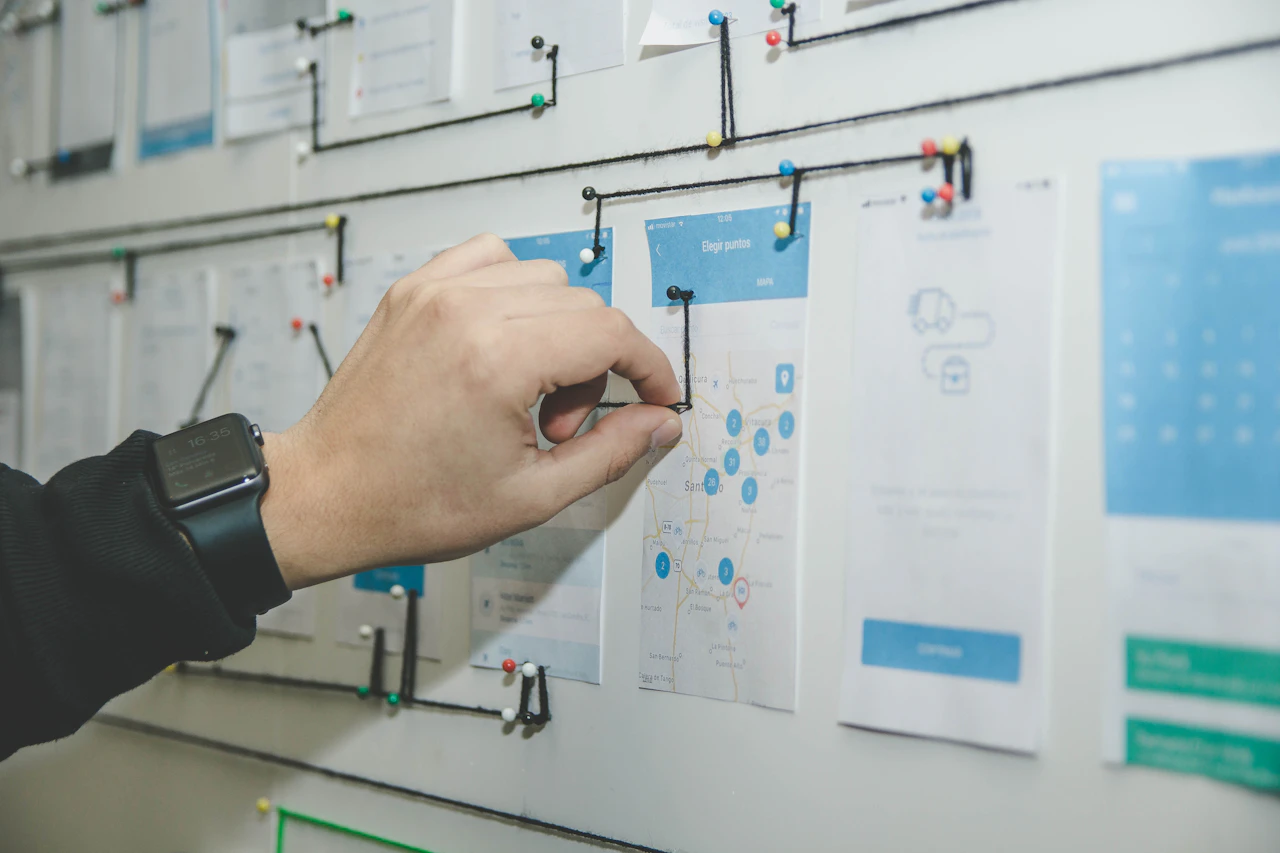
Photo: Towfiqu barbhuiya / Unsplash
The main driver of a software project's cost is the development time it takes, and that time is shaped by scope, complexity, integrations, design expectations, security requirements and the level of uncertainty. That's why "how much does an app cost?" has no single answer. Rather than quoting prices, this article walks through the factors that push an estimate up or down, one by one, and explains how you can keep your budget under control.
Why does cost vary so much?
Software isn't a product off a shelf; it's a labor service. The team spends time on analysis, design, development, testing and release to turn your need into a working system. Most of the gap between proposals comes from three things:
- Teams understanding the scope differently,
- Pricing uncertainty differently,
- Allocating different amounts of time to invisible work like quality, testing and documentation.
So when you compare proposals, look at what's included, not just the total.
The core factors behind software project cost
Scope and number of screens
The most direct factor is how many different things the software does. Every new user role, screen, form and business rule adds development time. Even an innocent-looking "reports" line item can turn into a serious chunk of work once filtering, exports and permissions are included.
Complexity of business rules
Two screens may look the same while the logic behind them is very different. Rules like discount calculations, approval chains, stock reservations and shift planning, once you account for their exceptions, are what take the most time. The more "but in this case" a rule contains, the higher the cost.
Integrations
Connecting to accounting software, a payment provider, a shipping company, a CRM or internal systems is a decisive item in most projects. The questions that affect cost are:
- Does the system you're connecting to have a well-documented API?
- Is a test environment available?
- Will data flow both ways, or only one?
- Does sync need to be real-time or periodic?
An integration that takes a short time with a well-documented API can take weeks with an old, undocumented system.
Design expectations
There's a big difference in effort between a clean interface built on an existing design system and a branded, animated interface where every screen is designed individually. For internal tools, a clean interface is usually enough; for customer-facing products, investing more in design can make sense.
Number of platforms
Do you need only a web app, or iOS and Android apps too? Each platform means additional development, testing and release work. Starting with a mobile-friendly web app lowers first-phase cost in many projects.
Security, compliance and data sensitivity
Software that handles personal, health or financial data needs extra safeguards: role-based permissions, audit logs, encryption, data retention and deletion policies, and the disclosure and consent flows required under KVKK (Turkey's data protection law). These cost more when bolted on later; they need to be planned from the start.
Existing systems and data migration
A greenfield project is not the same as one that replaces a system people have used for years. Cleaning up old data and moving it into the new structure is a separate line item in its own right.
Level of uncertainty
The clearer the requirements, the narrower the estimate. Every area marked "we don't fully know yet" leads teams to add a risk margin to the proposal. The most effective way to reduce uncertainty is a good brief and, if needed, a short discovery phase.
For large, uncertain projects, discovery can be planned as a separate phase. User flows are mapped, the systems to be integrated are examined, and risky technical points are tested with small experiments. At the end you have a clearer scope and a narrower estimate. Being able to take the discovery output to another team as well means this phase produces something of value that belongs to you.
Team structure and experience
How many people work on the project, and in which roles, also affects cost. An experienced team can do the same work faster and with fewer mistakes, so the hourly rate alone tells you little about total cost.
Cost items that get overlooked
When comparing proposals, ask whether these are included:
- Project management and meetings,
- Testing and bug-fixing time,
- Third-party service fees such as servers, domains, email services, maps or AI APIs,
- App store developer accounts,
- A post-launch warranty period,
- Monthly maintenance and updates,
- Documentation and team training.
If one proposal is noticeably lower than another, you'll usually find the difference in one of these items.
Same idea, two different scopes: a comparison
To see how cost shifts with scope, consider two versions of the same idea: a system that collects student applications for an educational institution.
Lean version:
- A single application form with document upload,
- An admin screen listing applications with status updates,
- An automatic email when an application is received.
Extended version:
- Different forms per program, with conditional questions,
- An approval flow where multiple reviewers score applications,
- Payment collection and export to accounting software,
- Two-way integration with the student information system,
- Reporting, exports and role-based permissions,
- Turkish and English interfaces.
Both could be called an "application system," but the second contains many times more work. Making clear which version you mean when you ask for a quote is a precondition for getting comparable numbers.
Ways to keep the budget under control
- Shrink the first version: Start with an MVP focused on the most critical flow, and add other features based on real usage data.
- Use existing building blocks: For things like authentication, payments and email, mature services are usually more economical than building from scratch.
- Scale design to the need: Not every screen needs a custom design.
- Make decisions quickly: The longer the feedback loop, the longer, and costlier, the project.
- Manage scope changes in writing: Seeing the impact of every mid-project request in writing prevents budget surprises.
What to prepare when you ask for an estimate
To get a more accurate estimate, share:
- A short description of the problem and the target users,
- A list of must-have features,
- The systems to integrate and their API access status,
- Platform expectations (web, mobile, extension),
- Any deadline and a budget range.
At Weras Labs, after an intro call based on this information, we prepare a written proposal with the scope, the timeline and a fixed estimate. You can see how we work on our services page.
Conclusion
Software project cost comes from the project's scope and uncertainty, not from a price list. Once you know how much each factor affects an estimate, you can compare proposals more accurately and manage your budget deliberately. If you'd like a concrete estimate for your project, get in touch with us.
Frequently asked questions
Why can't a software project be given a single price?
Because cost comes from the time required, which depends on the project's scope, the complexity of its business rules, its integrations and design expectations. Any price given without that information rests on assumptions.
Does it make sense to pick the lowest bid?
Price alone isn't a good yardstick. First compare whether the proposals include the same scope, testing, warranty period and maintenance.
Why do integrations affect cost so much?
Every external system works differently, with different documentation quality and testing options. Working with systems that are poorly documented or lack a test environment significantly extends development and testing time.
Do costs continue after launch?
Yes. You need to plan a maintenance budget for servers and third-party fees, security updates, bug fixes and new features.
About the author

Habip Dayan
Founder of Weras Labs
Habip Dayan is the founder of Weras Labs, a company that builds software products for professionals and teams. He has been building software since 2018 and writes about AI, cloud architecture and product design.
The Weras Labs newsletter
New articles, product updates and notes on building software. A few emails a month; unsubscribe any time.